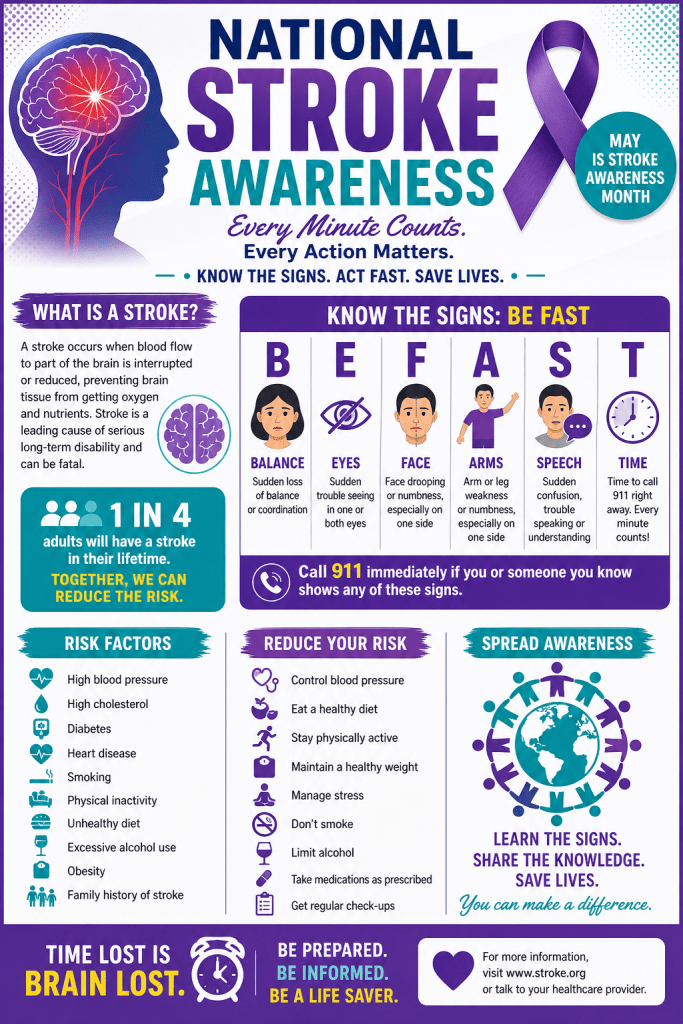
What Is a Stroke?
A stroke happens when blood flow to part of the brain is interrupted, either by a blocked artery (ischemic stroke) or a burst blood vessel (hemorrhagic stroke). Without oxygen-rich blood, brain cells begin to die within minutes, making stroke a medical emergency.
Know the Warning Signs: BE FAST
Recognizing stroke symptoms early can make a life-saving difference:
- Balance: Sudden loss of balance or coordination
- Eyes: Sudden trouble seeing in one or both eyes
- Face: Face drooping on one side
- Arms: Arm weakness or numbness
- Speech: Slurred speech or difficulty speaking
- Time: If you see any of these signs, call 911 immediately
Who Is at Risk?
Anyone can have a stroke, but risk increases with:
- High blood pressure
- Diabetes
- High cholesterol
- Smoking or vaping
- Heart disease
- Obesity and physical inactivity
- Family history of stroke
Steps You Can Take to Prevent Stroke
Up to 80% of strokes may be preventable with healthy lifestyle choices:
- Monitor and manage blood pressure
- Eat a heart-healthy diet
- Exercise regularly
- Avoid tobacco
- Limit alcohol
- Take medications as prescribed
Why Awareness Matters
Stroke is a leading cause of long-term disability in the U.S., but fast treatment improves outcomes and can reduce disability. Many treatments are time-sensitive, underscoring why immediate action is critical.
 This Stroke Awareness Month, share the signs, talk to loved ones, and help save lives. Knowing BE FAST could help protect your brain — or someone else’s.