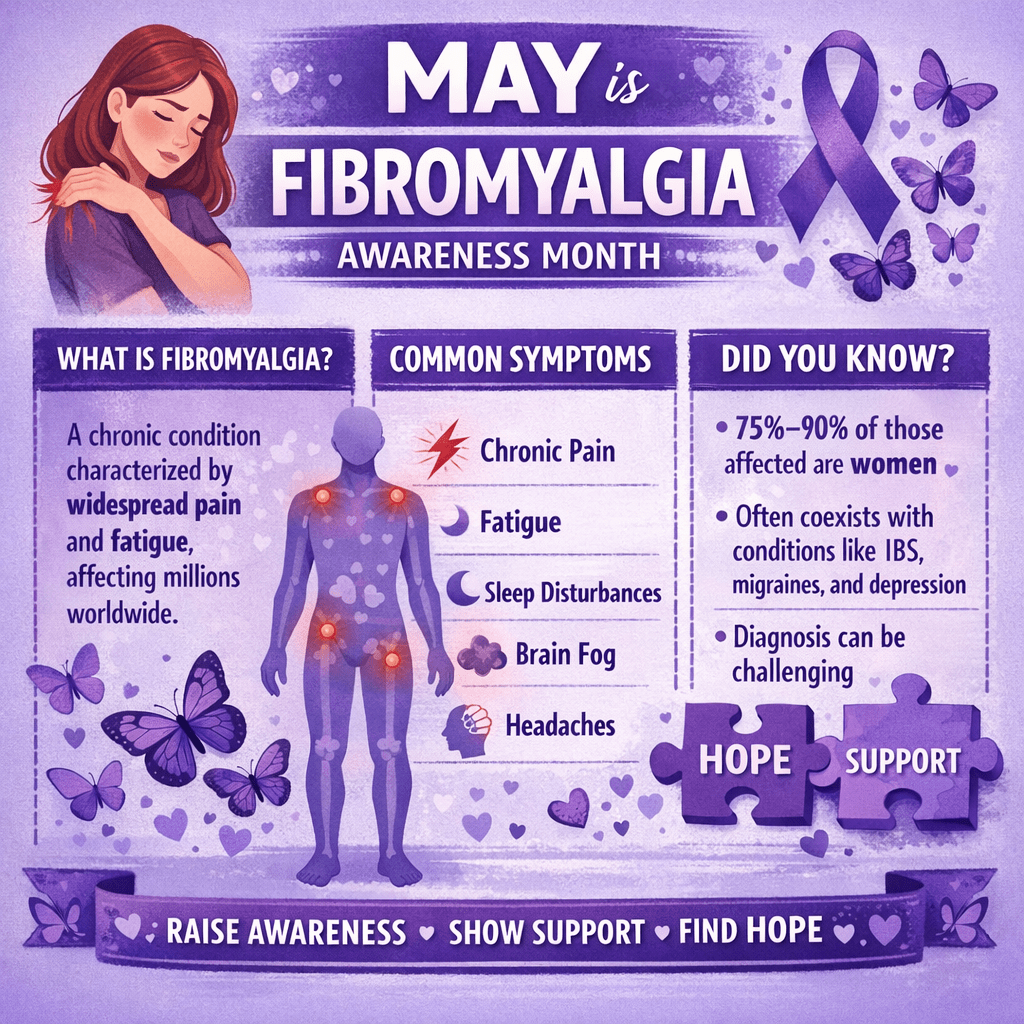
Fibromyalgia is a chronic, often invisible condition that affects the nervous system and causes widespread pain, fatigue, and heightened sensitivity to touch, light, and sound. It is very real—and far more complex than “just muscle pain.”
Who Is Affected?
- Impacts millions of people worldwide
- More common in women, but anyone can have it
- Often coexists with conditions like migraines, IBS, anxiety, depression, or autoimmune diseases
Common symptoms
Fibromyalgia symptoms vary from person to person and can fluctuate daily:
- Widespread muscle and joint pain
- Chronic fatigue, even after sleep
- “Fibro fog” (memory and concentration issues)
- Sleep disturbances
- Headaches
- Sensitivity to temperature, noise, or light
Because symptoms are invisible, many people face misunderstanding or disbelief.
What causes fibromyalgia?
There is no single known cause. Research suggests it involves:
- Abnormal pain processing in the brain and nervous system
- Genetics
- Physical or emotional trauma
- Chronic stress or illness
Treatment and management
There is no cure, but symptoms can be managed with:
- Medications
- Physical activity adapted to the individual
- Good sleep practices
- Stress management
- Cognitive and emotional support
What helps one person may not help another.
Why awareness matters
- Diagnosis can take years
- Early recognition improves quality of life
- Awareness reduces stigma and promotes compassion
- Support and validation make a real difference
How you can help
- Believe people when they talk about their pain
- Avoid minimizing symptoms
- Be patient with fluctuating abilities
- Educate yourself and others
Awareness leads to understanding. Understanding leads to support.
#fibromyalgiaawarenessmonth
#fibrowarrior
#InvisibleIllness
#chronicpainawareness
 Calhoun County Family Resource Network